Wisdom teeth soreness: what it means and when to seek treatment
Wisdom teeth soreness is one of the most common reasons adults in their late teens and twenties attend the dentist. Sometimes it is mild and temporary. In other cases, it can quickly become painful, swollen and difficult to ignore.
At Smile Perfections in Oadby, Leicester, we regularly assess patients who are unsure whether their wisdom teeth soreness is normal or a sign of something more serious. The key is understanding what is happening at the back of the mouth and knowing when intervention is needed.
This guide explains what causes wisdom teeth soreness, how to relieve discomfort, and when treatment such as extraction may be necessary. It is written to give clear, honest information based on clinical experience.
Why wisdom teeth cause soreness
Wisdom teeth are the third molars. They are the last teeth to erupt, usually between the ages of 17 and 25. Because they arrive late, there is often limited space available.
Wisdom teeth soreness usually happens for one of the following reasons:
- partial eruption
- trapped food and bacteria
- inflammation of the gum
- infection (pericoronitis)
- pressure from impacted teeth
- decay in hard-to-clean areas
Not every patient with wisdom teeth will experience problems, but when space is limited, soreness is common.
Is wisdom teeth soreness normal?
Mild wisdom teeth soreness during eruption can be normal. Patients often describe:
- dull aching at the back of the jaw
- tenderness when chewing
- mild gum swelling
This type of soreness often settles within a few days.
However, wisdom teeth soreness that becomes more intense, spreads to the jaw or ear, or is associated with swelling may indicate infection or impaction. That is when professional assessment becomes important.
A routine dental check-up allows us to monitor eruption and intervene early before pain escalates.
Pericoronitis: a common cause of wisdom teeth soreness
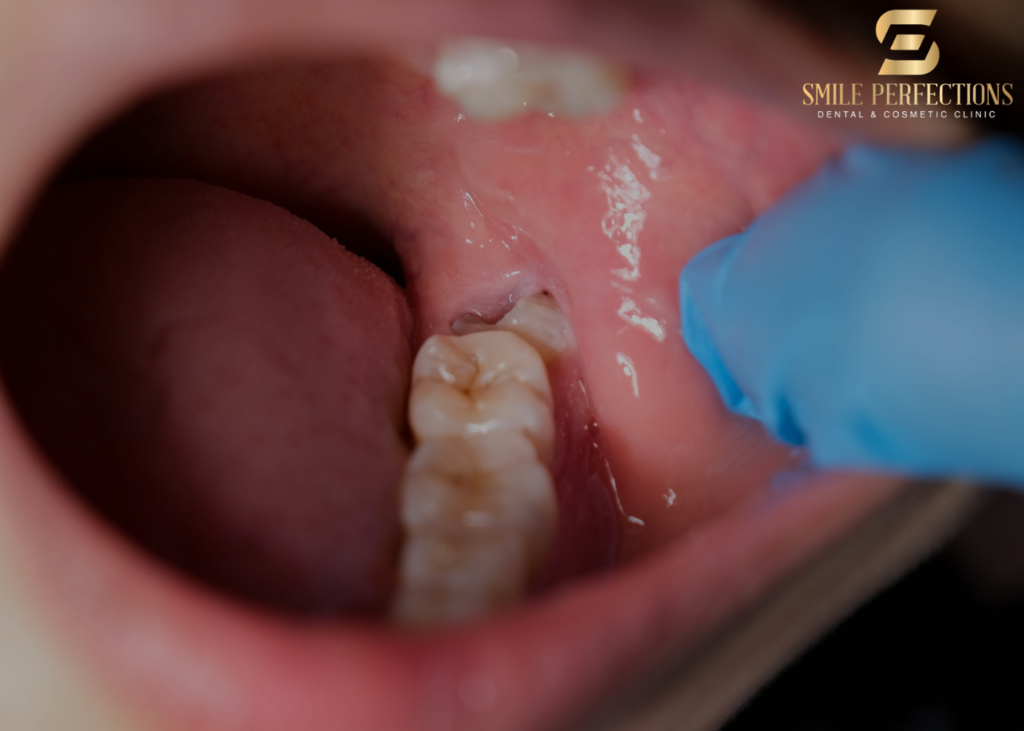
One of the most frequent causes of persistent wisdom teeth soreness is pericoronitis. This occurs when a partially erupted wisdom tooth is covered by a small flap of gum that traps food and bacteria.
Signs include:
- swelling around the back tooth
- bad taste in the mouth
- difficulty opening the jaw
- pain when swallowing
- tenderness when touching the area
Pericoronitis can develop quickly and may require urgent treatment. In such cases, assessment by an emergency dentist is recommended to prevent the infection from spreading.
Impacted wisdom teeth
An impacted wisdom tooth is one that does not fully erupt due to lack of space or obstruction by another tooth.
Impaction can lead to:
- ongoing wisdom teeth soreness
- pressure pain
- decay in adjacent molars
- gum inflammation
- cyst formation in rare cases
X-rays taken during routine check-ups help determine whether a tooth is impacted and whether removal is advisable.
Wisdom teeth soreness vs decay pain
It is important not to assume that soreness at the back of the mouth is always caused by eruption.
Sometimes the pain comes from:
- decay in the wisdom tooth
- decay in the second molar
- gum disease
- cracked fillings
If decay has reached the nerve, root canal treatment may be considered in specific cases. However, for wisdom teeth with limited function or poor position, extraction is often the more predictable solution.
When wisdom teeth soreness needs urgent care
Seek immediate dental advice if wisdom teeth soreness is accompanied by:
- facial swelling
- difficulty swallowing
- fever
- severe pain
- pus or discharge
- restricted mouth opening
These symptoms suggest spreading infection and require prompt attention.
At Smile Perfections, urgent cases are assessed promptly through our emergency dental service, ensuring infections are managed safely and efficiently.
Treatment options for wisdom teeth soreness
Treatment depends on the cause.
1. Improved cleaning and hygiene
If the issue is mild inflammation, enhanced oral hygiene may resolve the problem. A visit to a dental hygienist can remove plaque and provide tailored advice on cleaning partially erupted teeth.
2. Antibiotics
If infection is present, antibiotics may be prescribed. However, they treat symptoms temporarily and do not remove the underlying cause.
3. Wisdom tooth extraction
When wisdom teeth soreness is recurrent or linked to impaction, removal is often the definitive solution.
Extraction is carried out under local anaesthetic. For anxious patients, we also offer sedation led by Dr Juttes Pallipatt and Dr Pratima Pallipatt, ensuring comfort throughout the procedure.
More information about the process can be found under tooth extraction.
What happens during wisdom tooth removal
The duration varies:
- eruption soreness: a few days
- mild inflammation: several days to one week
- infection: until treated
- impacted tooth pain: ongoing until addressed
If soreness persists beyond 7–10 days or keeps returning, investigation is advised.
Preventing wisdom teeth soreness
Prevention is not always possible, but you can reduce risk by:
- attending regular dental check-ups
- cleaning carefully around the back molars
- reporting discomfort early
- seeking advice before infection develops
Patients who delay assessment often experience more severe symptoms.
Sedation and nervous patients
We understand that the thought of wisdom tooth extraction can cause anxiety.
Our sedation service ensures patients feel relaxed and comfortable during treatment. Care for anxious patients is part of our commitment to providing calm, supportive dentistry.
Learn more about our practice here: Smile Perfections
Why choose Smile Perfections for wisdom teeth concerns
- Experienced principal dentists
- Advanced diagnostic imaging
- Calm environment
- Emergency appointments available
- Clear, honest treatment planning
Our approach is always based on careful assessment and patient comfort.
Final thoughts
Wisdom teeth soreness is common, but it should not be ignored when it becomes persistent or severe. Early assessment prevents complications and makes treatment simpler.
At Smile Perfections in Oadby, Leicester, we focus on accurate diagnosis, patient comfort and predictable outcomes. Whether soreness is mild inflammation or requires extraction, our team provides calm, professional care based on experience and evidence.
If wisdom teeth soreness is affecting you, a dental examination is the safest next step to ensure long-term oral health.
Patients frequently ask
No. Mild soreness can occur during eruption. Persistent or severe pain needs assessment.
Sometimes mild cases resolve, but recurring soreness usually indicates a structural issue.
No. Removal is recommended only when problems arise or are likely.
The procedure itself is performed under local anaesthetic. Post-operative discomfort is usually manageable.
If swelling, fever or severe pain develops, seek urgent care.
Medical and dental information disclaimer
The information provided in this article is for general guidance only and should not replace a professional dental examination. Individual cases vary. If you experience severe pain, swelling or difficulty swallowing, seek urgent dental assessment or contact NHS 111 for advice.