Wobbly tooth: what it means, what to do and when to see a dentist
A wobbly tooth can be worrying at any age. For children, it is often a normal part of development. For adults, however, a loose tooth is usually a sign that something needs attention. Many patients come to Smile Perfections in Leicester unsure whether they should wait, book a routine appointment, or seek urgent care.
The key thing to understand is this: a wobbly tooth should never be ignored, especially in adults. Early assessment can often save the tooth or prevent further problems.
In this guide, we explain why teeth become loose, how dentists assess a wobbly tooth, what treatments are available, and when to seek urgent help. We will also explain how our team at Smile Perfections supports patients of all ages, from children losing baby teeth to adults dealing with gum disease or dental trauma.
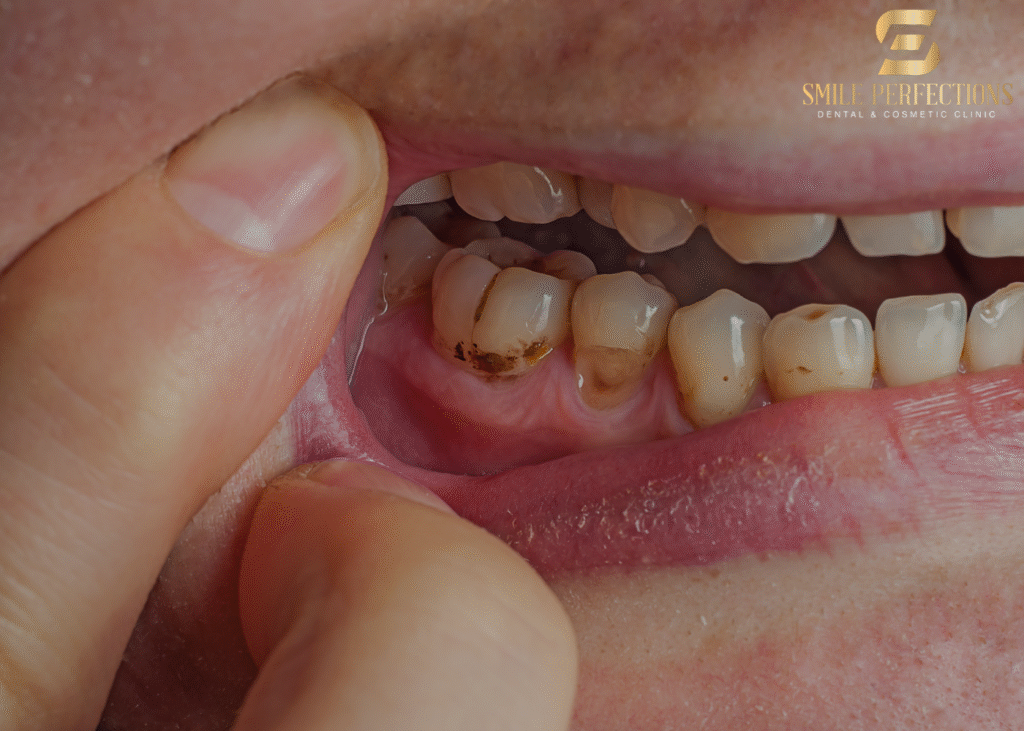
What does a wobbly tooth mean?
A tooth becomes loose when the structures that hold it in place are weakened. Teeth are supported by:
- the surrounding gum tissue
- the jawbone
- periodontal ligaments (tiny fibres that anchor the tooth)
When these structures are damaged or inflamed, the tooth can begin to move.
A wobbly tooth may feel slightly mobile when touched, or noticeably loose when eating. Some people notice it suddenly, while others become aware of gradual movement over time.
If you are unsure whether movement is normal or a cause for concern, booking a dental check-up in Leicester is always the safest option.
Wobbly tooth in children: when it’s normal
For children, a wobbly tooth is often completely normal. Baby teeth are designed to fall out to make space for adult teeth.
Typical features of a normal wobbly tooth in children include:
- no pain or swelling
- gradual loosening over weeks
- age between 6 and 12
- adult tooth visible or erupting underneath
At Smile Perfections, we regularly see young patients through our children’s dentistry service in Leicester, where we monitor tooth development and reassure parents when everything is progressing as expected.
However, even in children, a wobbly tooth should be checked if there is pain, swelling, or a history of trauma.
Wobbly tooth in adults: common causes
In adults, a wobbly tooth is not normal and usually signals an underlying problem. Below are the most common causes we see at our practice.
1. Gum disease (the most common cause)
Gum disease weakens the tissues and bone that support the teeth. As the disease progresses, teeth can begin to loosen.
Signs often include:
- bleeding gums
- swollen or tender gums
- bad breath
- gum recession
- changes in bite
Early gum disease can often be stabilised with professional cleaning and ongoing care from a dental hygienist in Leicester.
Left untreated, advanced gum disease can lead to permanent tooth loss.
2. Dental trauma or injury
A knock to the mouth, fall, or sports injury can damage the ligaments holding a tooth in place. Even if the tooth looks intact, it may still be loose beneath the surface.
Any wobbly tooth following trauma should be assessed urgently. Our emergency dentist in Leicester can evaluate the tooth, take X-rays and decide whether it can be stabilised.
3. Teeth grinding or clenching
Constant grinding places excessive pressure on teeth and supporting structures. Over time, this can cause mobility, especially if gum health is already compromised.
Patients often grind their teeth without realising it, particularly at night.
4. Infection around the tooth
An untreated infection can damage bone and cause a tooth to loosen. This may be accompanied by pain, swelling or a bad taste.
Infections require prompt treatment and should not be left to settle on their own.
5. Bite problems
If a tooth takes too much force when biting or chewing, it can gradually loosen. Bite assessment during a dental check-up can identify and correct this.
Is a wobbly tooth an emergency?
Not every loose tooth is an emergency, but some situations require immediate attention.
You should contact our emergency dentist in Leicester if a wobbly tooth is accompanied by:
- sudden pain
- swelling in the gums or face
- bleeding that does not stop
- pus or discharge
- fever
- trauma or accident
Quick action can often save the tooth.
How dentists assess a wobbly tooth
When you visit Smile Perfections, we take a careful and structured approach.
Your dentist will:
- examine the tooth and surrounding gums
- measure the degree of movement
- assess gum health
- take X-rays to check bone levels
- review your medical and dental history
- discuss symptoms and timeline
This allows us to identify the cause and decide whether the tooth can be stabilised or needs further treatment.
Treatment options for a wobbly tooth
Treatment depends entirely on the cause. In many cases, early intervention can prevent tooth loss.
1. Deep cleaning and gum treatment
If gum disease is the cause, professional cleaning is essential. This often involves removing plaque and bacteria from below the gumline.
Ongoing care with our dental hygienist in Leicester is key to stabilising the tooth and preventing further damage.
2. Splinting the tooth
If a tooth is loose due to trauma or early gum disease, it may be possible to stabilise it by splinting it to neighbouring teeth. This allows the supporting tissues time to heal.
3. Bite adjustment
If uneven bite pressure is contributing, adjusting how the teeth meet can reduce stress on the affected tooth.
4. Treating infection
If infection is present, treatment may involve cleaning, medication, or further dental procedures to remove the source of infection.
5. Tooth removal (last resort)
If a tooth cannot be saved, removal may be necessary to protect surrounding teeth and gums. Our team always explores every option before recommending extraction.
What not to do if you have a wobbly tooth
Many patients unintentionally make things worse. Avoid:
- constantly touching or wiggling the tooth
- chewing on that side
- ignoring bleeding or swelling
- delaying professional assessment
- using home remedies instead of dental care
If in doubt, contact Smile Perfections for advice or to arrange an appointment.
Wobbly tooth prevention: protecting your teeth long-term
Preventing tooth looseness comes down to consistent care and early intervention.
Key steps include:
- brushing twice daily with fluoride toothpaste
- cleaning between teeth every day
- attending regular check-ups
- seeing a dental hygienist routinely
- addressing grinding or bite issues early
- wearing a mouthguard for sports
New patients can register easily through our new patient page, where we welcome individuals and families to the practice.
Wobbly tooth in children: when to seek advice
While many loose baby teeth are normal, parents should book an appointment if:
- the tooth is loose after a fall
- there is pain or swelling
- the tooth is discoloured
- a permanent tooth is not coming through
Our children’s dentistry service in Leicester focuses on gentle care, reassurance and early detection of problems.
Why patients trust Smile Perfections
- Our clinicians treat wobbly teeth daily, across all age groups, from children to older adults.
- We diagnose the underlying cause accurately and use evidence-based treatments to stabilise teeth whenever possible.
- Our advice reflects current clinical standards and years of hands-on dental care.
- We communicate clearly, explain all options, and prioritise preserving natural teeth whenever it is safe to do so.
Final thoughts
A wobbly tooth is a sign that something needs attention, but it does not always mean tooth loss. With prompt assessment and the right treatment, many loose teeth can be stabilised and preserved.
If you are concerned about a loose tooth, the team at Smile Perfections Leicester is here to help. Whether you need a routine check-up, hygienist care, children’s dentistry or urgent treatment from our emergency dentist in Leicester, we will guide you calmly and professionally every step of the way.
Patients frequently ask
In children, it is often normal. In adults, it usually indicates a problem and should be checked.
Yes, in many cases, especially if treated early.
No. This can cause infection or damage surrounding tissues.
Gum disease is the most common cause, but not the only one.
If the tooth is loose after trauma, painful, swollen, or infected, seek urgent care.